-
State of Grace: Confession, Communion and Innocence

A Catholic child recalls the intense preparation for a first confession and the anxious effort to stay perfectly “sin-free” for sixteen hours before receiving Holy Communion. Through gentle humor and vivid memories of white clothes, candles, and a lost photograph, the story captures a fleeting moment of childhood innocence.
-
The Boy by the River
-
A Tale of Two Rivers: Awe and Belonging

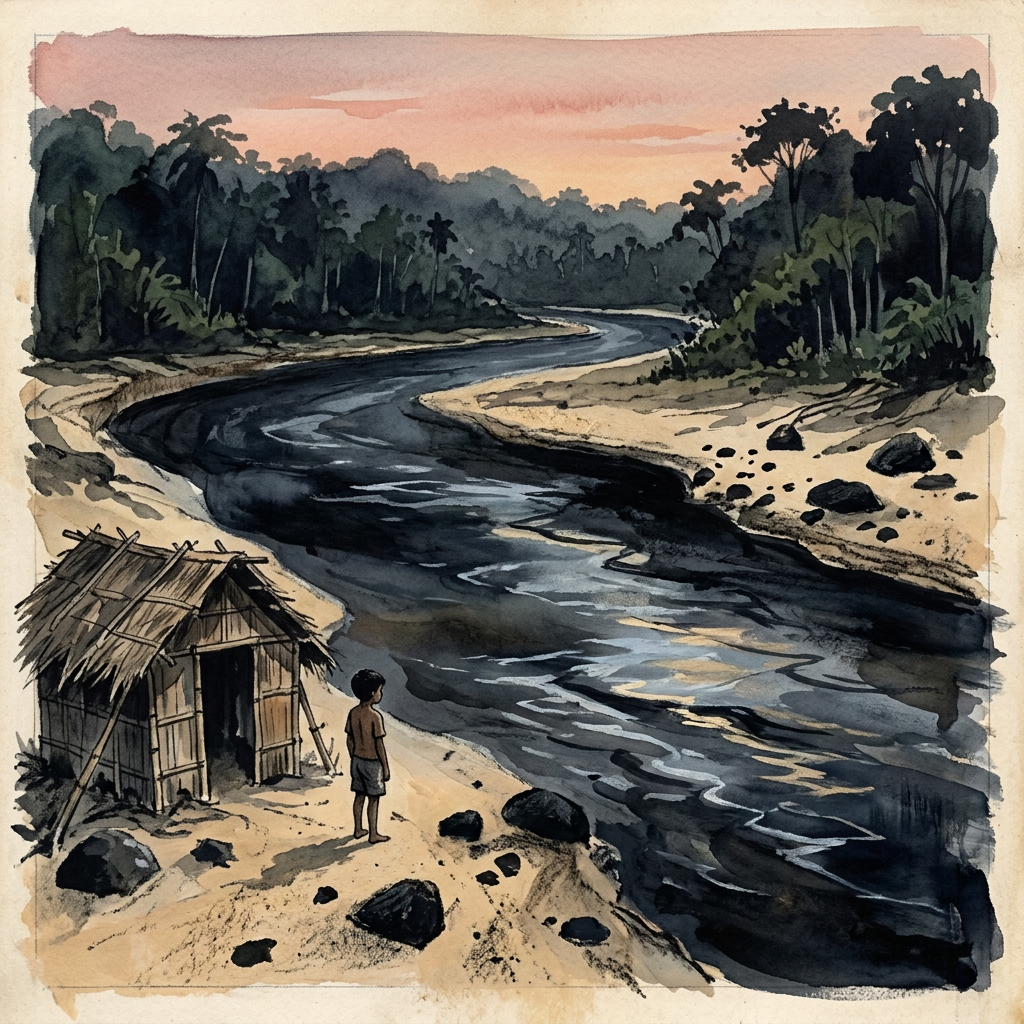
This meditation on Kerala’s Periyar and Meenachil rivers moves between theatre and hearth, history and home. The Periyar evokes divine grandeur and shadowy dusk skies; the Meenachil carries hometown scents and unvarnished politics. Together, they become companions in memory, teaching awe, rootedness, and the river-like persistence of life’s onward journey.
-
The Altar Boy: Mist and Mystery
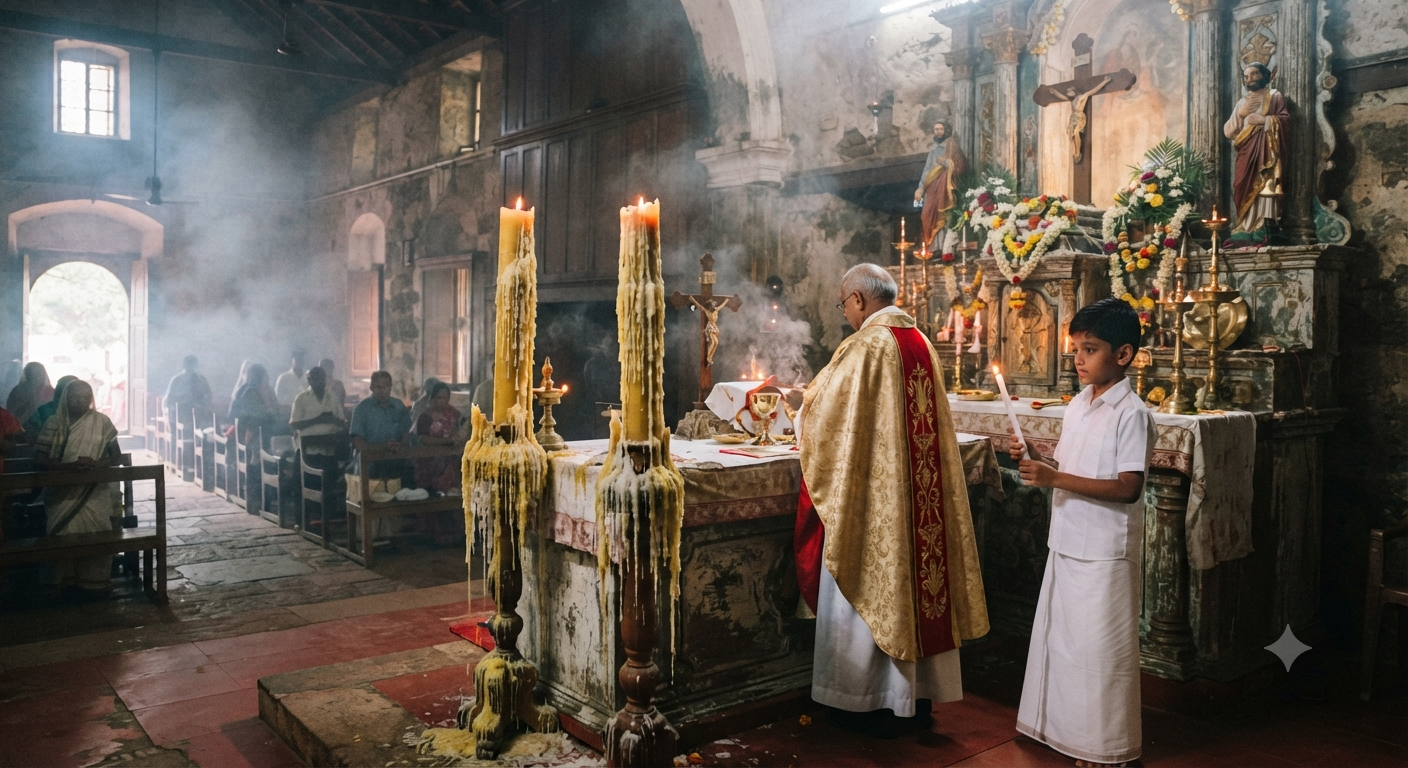
A boy rises at an ungodly hour to escape muddy fields and a stubborn cow, only to find himself enthralled by the altar’s secret world. In the half-dark church, incense thickens the mist, Syriac hymns turn breath into visible prayer, and a small hand lifting a priest’s vestment believes it upholds the bridge between heaven…
-
Bapputtykka’s Shop
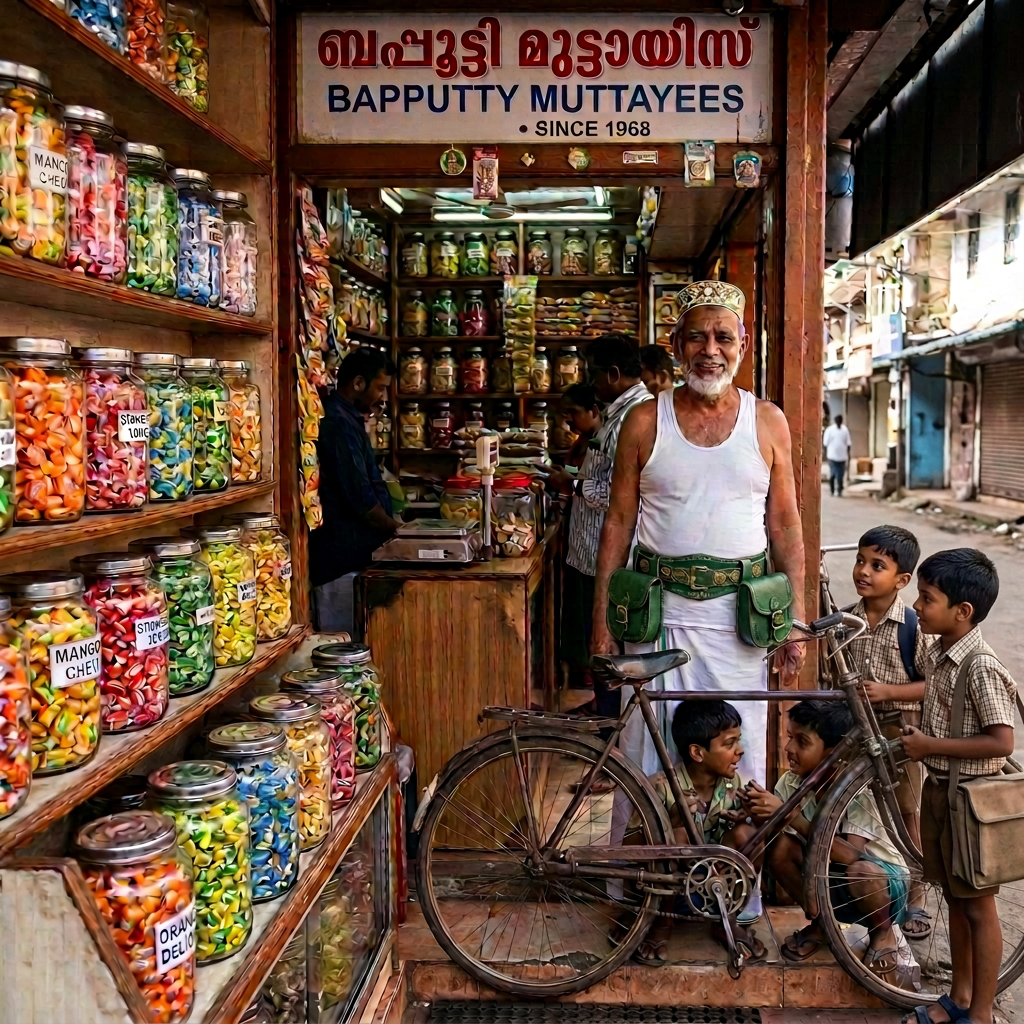
In this nostalgic vignette, a village boy looks back on Ikka, the sweet-shop owner with the green-belt piggy bank, whose jars of muttayees and rented bicycles drew children like moths. From cashew-nut barters to bruised knees and “Muttayee Moosa’s” sugary influence, the memories linger as a gentle lesson in friendship, resourcefulness, and the small economies…
-
Ink Stains and Memories: A Journey Through Youth

The passage reflects on the nostalgia of childhood experiences with writing instruments, focusing on the transition from pencils to fountain pens. Initially, pencils served as playful weapons, while the fountain pen represented maturity, despite its frequent ink leaks that stained hands and uniforms. The narrative highlights the unique rituals of filling pens and the joy…
-
The Magic of Harvest Tales: Childhood Memories and Myths
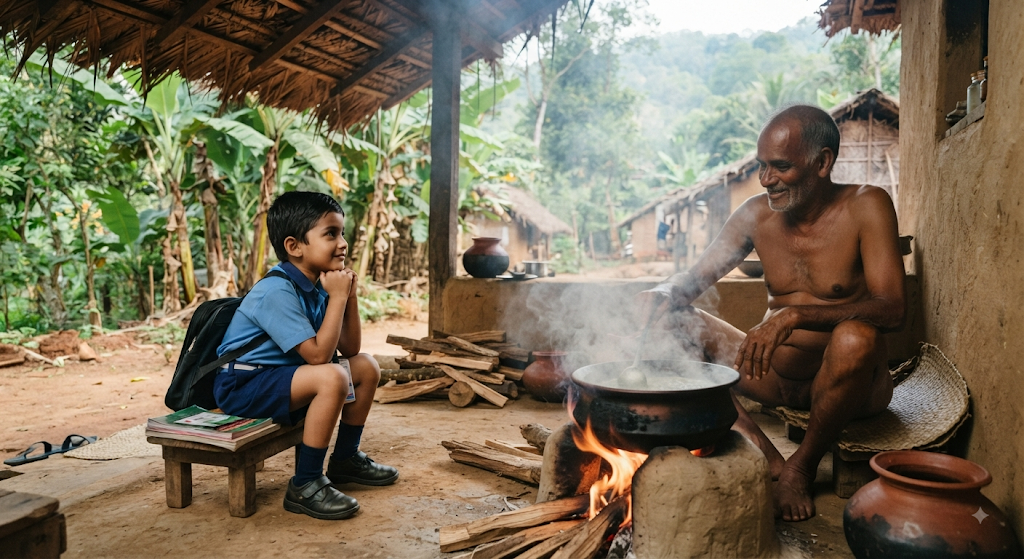
The narrative revolves around Naadi, a Cheruman from Kerala, who annually returns during harvest time, captivating a child’s imagination with tales of warriors, jungle gods, and mythical creatures. Through the enchanting scents of paddy and boiling kanji, Naadi becomes a cherished figure, embodying ancestral memories and folklore. His storytelling fosters dreams of bravery and aspirations.…

The Sacred Detour
Where wandering meets wonder