
Letting Go Begins with the Everyday
After many decades, I recently had my hair cut at home. Urban Company, an all-in-one service provider known for repairs and household maintenance, has lately ventured into salon services as well. Curious, I decided to try it instead of waiting my turn at the neighbourhood salon I usually visit. The experience took me straight back to childhood.
A Childhood Ceremony in the Backyard
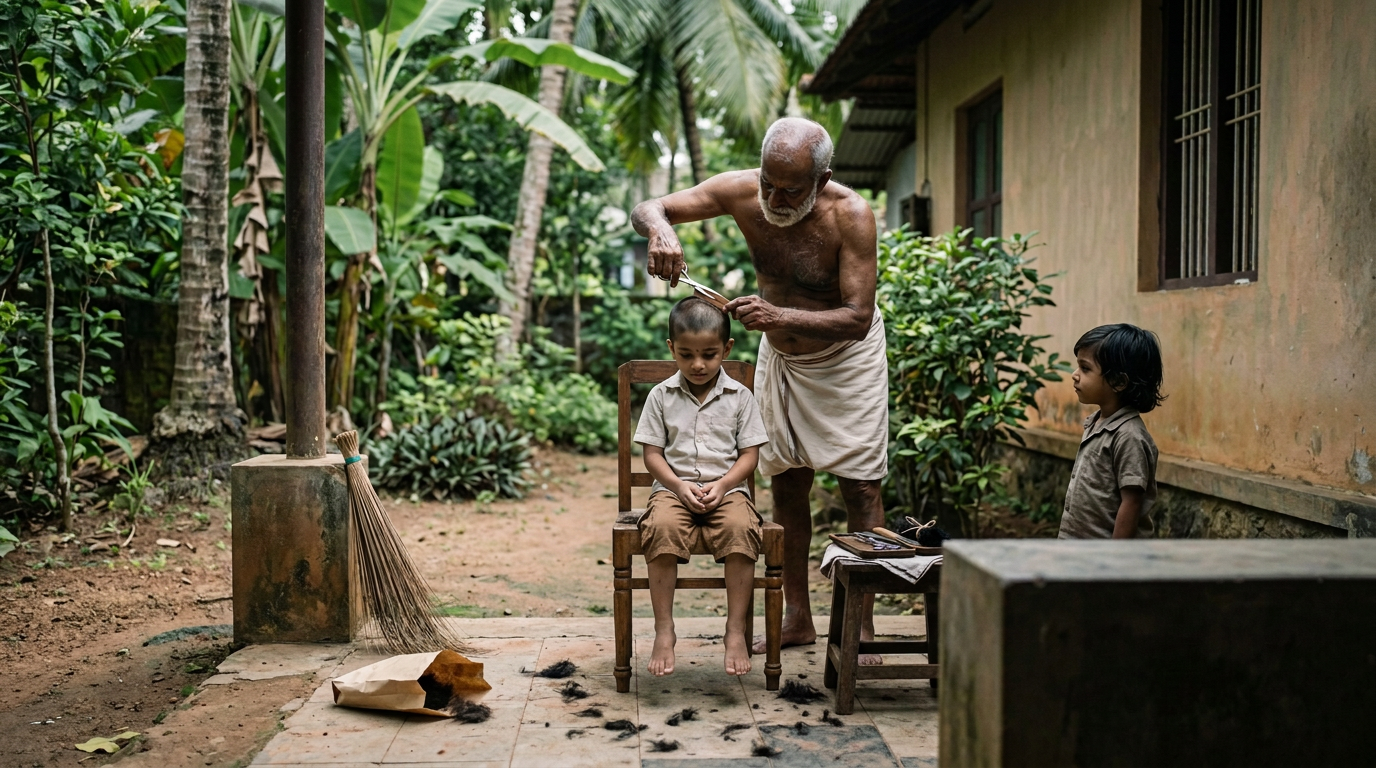
Back then, haircuts happened in our backyard. Once a month, the village barber would arrive to shear my siblings and me. It was a simple ceremony with a well-established order. The youngest was dealt with first, then the next oldest, and so on. My elder brothers were already grown-up enough to visit the nearby town for their haircuts and had escaped this monthly ordeal. We, the younger ones, were not so fortunate.
The barber, a fairly old man, would arrive in the morning carrying a small bag containing his tools: scissors, combs, a brush, and, most importantly, the manual trimmer known as the cutting machine. It resembled a miniature lawn mower and levelled the backs and sides of our heads with alarming efficiency.
He was not known for gentleness. He attacked our hair with the determination of a man settling old scores, as though we had deliberately allowed it to grow just to harass him. The only soothing aspect of the ordeal was the rhythmic music of his scissors, opening and closing intermittently as he paused to decide where to demolish next.
When the operation was over, he would sweep up the fallen hair, collect it in a paper packet, throw it away somewhere, collect his monthly fee from my father, and disappear until the following month.
When Hair Becomes Waste
The Urban Company stylist was the complete opposite. Urbane, courteous, and remarkably gentle, he approached the task almost like a consultant. Before beginning, he carefully examined my head—the first time in decades, and long overdue—and asked how I wanted my hair cut. I told him, nothing fancy, just cut and trim as he deems fit. Half an hour later, the ritual ended much the same way it had all those years ago. He swept the fallen hair from the floor, gathered it neatly into a packet, and left it beside the waste basket for disposal.
The ending was the same, but there was a subtle difference. This packet contained only my hair. In childhood, the discarded heap had always been a mixture of my siblings’ hair and mine. Later, at the local salon, my hair vanished into anonymous piles mingled with strangers’. I never gave it a second thought. This time, however, the packet sat there for a while, waiting to be thrown away. Just thirty minutes earlier, that hair had been part of me. I had washed it, combed it, worried about it thinning, and occasionally wished there were more. Now it lay detached and lifeless, transformed without ceremony into waste.
The Strange Ease of Small Losses
And I realised how easily I accepted its departure. There was no grief. No sense of loss. No reluctance to see it discarded. That led me to a larger thought.
If I can watch a part of myself become refuse without distress, could I one day learn to regard the rest of the body in the same way? Could I see it, too, as something borrowed for a while and eventually returned? Perhaps the peace that so often eludes us comes not from holding on, but from recognising that letting go is built into the design of things.
The hair that was part of me in the morning became waste by afternoon. The body itself may not be very different. Nature quietly rehearses this truth every day. We notice it in falling leaves, fading flowers, shed skin, clipped nails, and discarded hair. The message is always the same: what we call our own today may not remain ours tomorrow. Everything is temporary, moving steadily from belonging to letting go. It is here today and gone tomorrow. Hair offers a simple reminder of that reality: hair today, waste tomorrow.
The little packet by the wastebasket seemed to embody this truth, silently yet eloquently.


Got thoughts? Please share them below.